
Hey! Did you hear what happened yesterday?
Guess what?! Something super cool happened in the world of space yesterday! Russia just patented a brand-new space station design that could give astronauts something they totally miss in space: gravity! Pretty neat, right?
Let's break it down!
Okay, so you know how when you're on Earth, gravity pulls you down and keeps your feet on the ground? Well, up in space, everything just floats around! Astronauts float, their food floats, even their pens float. While that sounds fun for a bit, it's not actually very good for people's bodies over a long time. Their muscles get weaker, and their bones get less dense because there's no "pull" to work against.
So, imagine this: Russia has designed a space station that can actually make its own "fake" gravity! How? It probably spins around, and as it spins, it gently pushes things and people to the outside walls, making it feel like there's a little bit of gravity pulling them down. Think of it like being in a centrifuge, but way bigger and designed for living!
This is a huge deal because it could mean astronauts could stay in space much longer without getting as sick, and it could even make space travel to other planets easier and safer for them. No more floating soup!
NASA's Pick of the Day
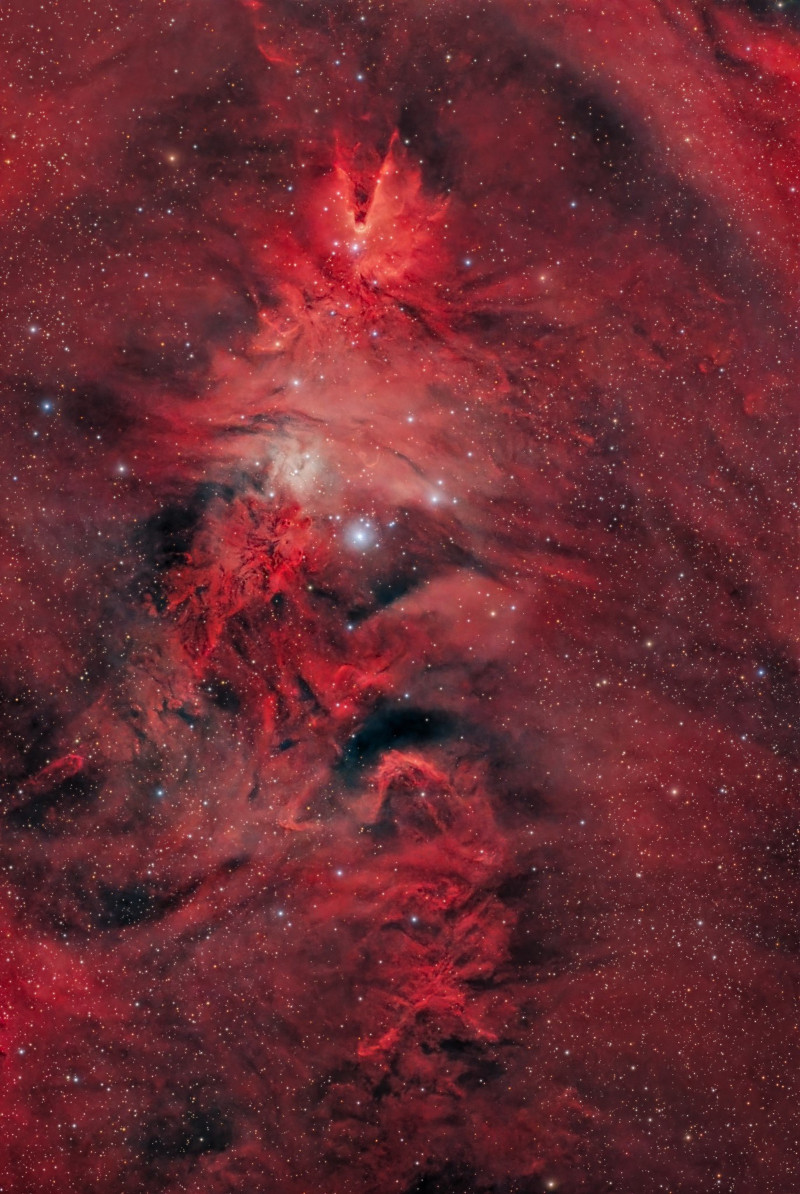
Now, get ready for an absolutely breathtaking picture from NASA! They showed us this incredible cosmic wonderland nicknamed the "Unicorn, Fox Fur, and Christmas Tree" region! How cool are those names?!
This stunning spot in space is super far away, about 2,700 light-years from us. A "light-year" is how far light travels in one whole year, and light travels super, super fast! So, 2,700 light-years is like, a ridiculously long journey, even for light! It's found in a faint constellation called Monoceros, which actually means "the Unicorn." How fitting for a magical-looking place like this!
In this picture, you'll see a wild mix of colors. The bright reddish parts are like giant cosmic nurseries where brand new baby stars are being born! Their incredible energy makes the gas around them glow red. Then there are these dark, shadowy patches, which are actually huge clouds of dust blocking the light from behind them, like big space blankets.
But wait, there's blue too! Where some of those dust clouds are really close to the super hot, young stars, they catch the starlight and reflect it back to us, making those pretty blue areas. It's like the dust is sparkling with star-shine! Right in the middle, you can spot a really bright, changing star called S Monocerotis, surrounded by a lovely blue haze.
Look closely and you'll see a group of stars arranged kind of like a simple triangle. Those stars are popularly known as the "Christmas Tree star cluster"! And at the very top of this cosmic tree, there's a strange, upside-down cone shape carved out by the powerful light from the young stars – that's called the "Cone Nebula." Underneath the "tree," you'll find a beautiful, tangled mess of glowing gas and dust that looks just like a furry pelt; that's the awesome "Fox Fur Nebula"!
This whole incredible scene is enormous – it spans about 80 light-years across! To give you an idea of how big that looks in the sky, it's like fitting three full moons stacked on top of each other! It's truly a cosmic masterpiece.

0 댓글